

Article: Why Use an Automatic Watch Winder? Complete Review
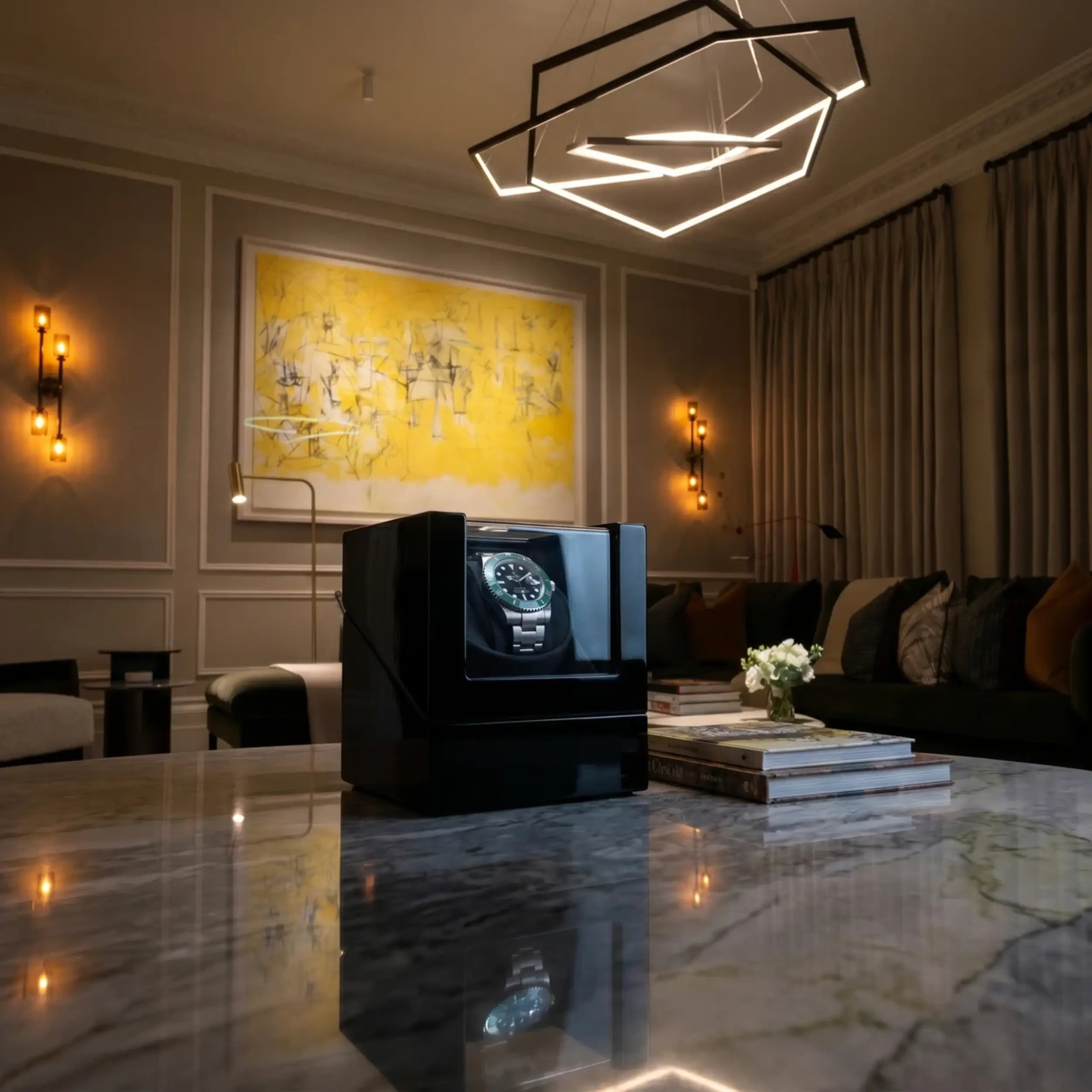
Why Use an Automatic Watch Winder? Complete Review
In brief: Yes, an automatic watch winder is useful as soon as you don't wear your watch daily. It keeps the movement running, avoids repeated time adjustments, and preserves the longevity of the internal oils. For watches with complications (perpetual calendar, moon phases, GMT), it becomes practically indispensable. For a simple watch worn every day, it remains a valuable comfort but not critical.
The automatic watch winder is often presented as an indispensable accessory. But is it really? For whom, under what conditions, and with what concrete benefits? This comprehensive review answers these questions without sales talk — with the real advantages, honest limitations, and mistakes to avoid.
How does an automatic watch work?
Before judging the usefulness of a winder, one must understand the mechanism it serves.

An automatic watch is equipped with a rotor — an oscillating weight that rotates with wrist movements. This rotation is converted into mechanical energy stored in the mainspring. As long as the watch is worn regularly, the spring remains wound and the watch functions.
Without regular wear, the power reserve depletes in 38 to 72 hours depending on the caliber. The watch stops. And when it stops, you have to wind it manually, set the time, the date — and on watches with complications, reset functions that sometimes require several minutes of manipulation.
To remember: an unworn automatic watch stops in 38 to 72 hours. Each stop requires manual time setting, stressing the adjustment mechanism, and on watches with complications, a sometimes long and delicate procedure.
The real advantages of a watch winder
1. Keep the movement active effortlessly
The main advantage is simple: your watch is always ready to be worn. No manual winding, no time setting, no recalibration of complications. You put the watch down at night, it runs overnight, and the next day it displays the exact time.
2. Preserve movement oils
The oils that lubricate the components of an automatic caliber are designed to work in motion. A caliber left stationary for weeks or months sees its oils gradually thicken — which accelerates mechanical wear upon restart. A winder keeps the caliber constantly active and preserves the optimal viscosity of lubricants.
3. Protect complicated watches
This is where the usefulness of the winder is most concrete and least debatable. On a watch with:
- Perpetual calendar (Patek Philippe, IWC, Audemars Piguet): resetting after stopping requires a precise and delicate procedure.
- Moon phases: requires manual recalibration after each stop.
- GMT / dual time zone (Rolex GMT-Master II, Omega Seamaster GMT): separate setting of the two time zones.
- Tourbillon: delicate mechanism that prefers constant activity.
For these watches, the winder is not a luxury — it is a protection for the mechanism and a real time saver with each use.
4. Organize and present your collection
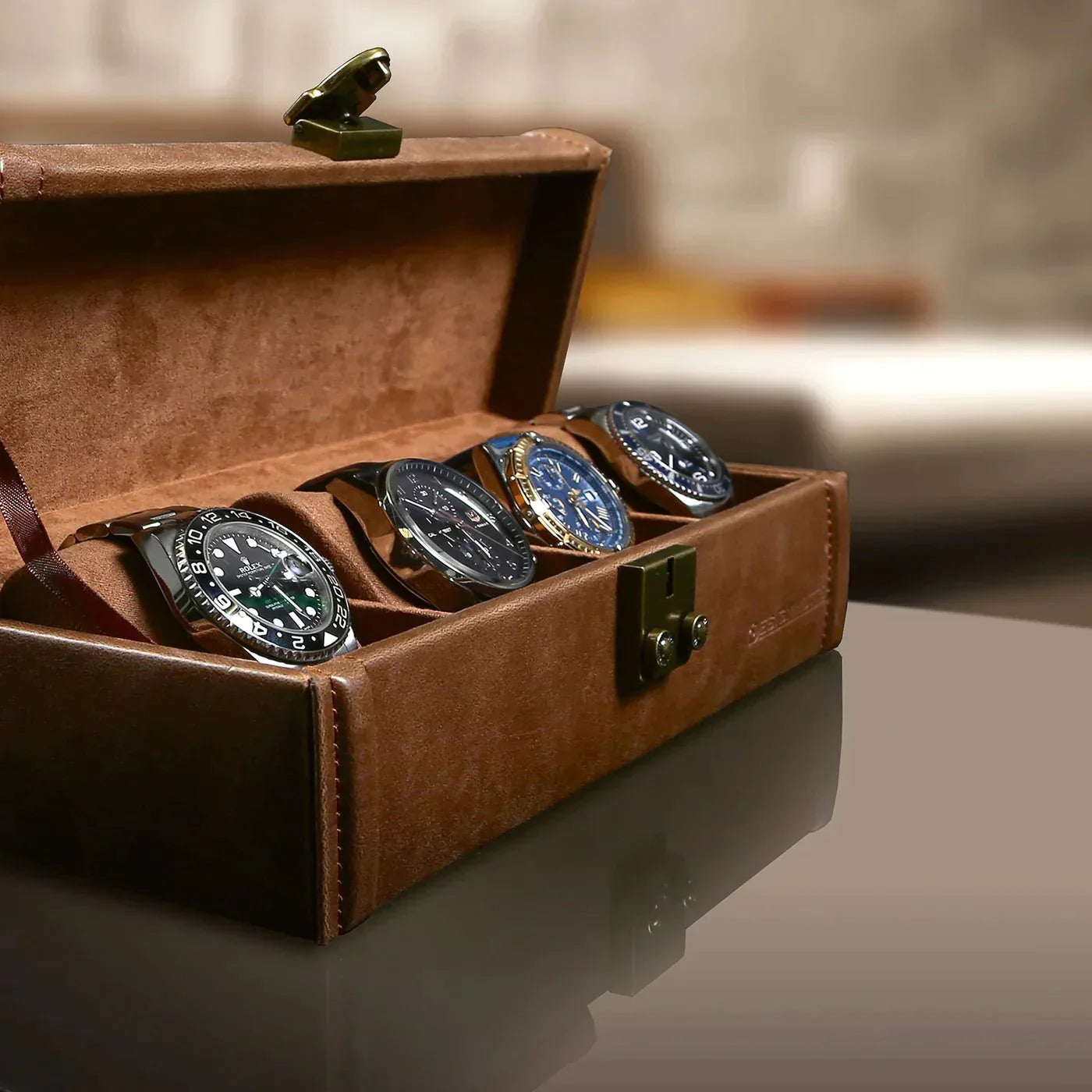
A multi-slot winder physically structures your collection. Each watch has its place, rotates according to its own parameters, and is visible at a glance. It is also an interior object in its own right — particularly for models made of wood, leather, or carbon.
The honest limitations of the winder
A winder is not essential for everyone
If you own a single simple automatic watch (without major complications) and wear it every day, a winder doesn't change much in your life. The watch remains wound naturally through daily wear. The investment is less justified.
A winder does not replace maintenance
Keeping a caliber in constant motion does not exempt it from the recommended watch service every 3 to 5 years. Oils degrade over time, not just when stopped. The winder preserves, but does not maintain.
A bad winder can do more harm than good
A winder with an excessively high TPD, a motor with excessive vibrations, or an unsuitable rotation direction does not benefit the caliber. It doesn't break it — the anti-overwind device of modern watches prevents this — but it generates unnecessary vibrations on the components. The choice of model and settings matters as much as the decision to buy.
To remember: a poorly set winder (incorrect TPD, wrong rotation direction) provides no real benefit. Correct parameterization according to your watch's caliber is as important as the quality of the winder itself.
The most common mistakes
Mistake 1 — Choosing a winder without checking TPD compatibility
Each caliber has its own TPD (Turns Per Day) requirements. A winder that does not allow precise adjustment of this parameter is ill-suited. Always check the recommended TPD for your watch before any purchase. Consult our complete TPD Guide.
Mistake 2 — Ignoring the direction of rotation
Most modern calibers are bidirectional, but some prefer clockwise or counter-clockwise rotation. The Rolex Daytona caliber 4130, for example, prefers clockwise rotation. Choose a winder that offers all three options.
Mistake 3 — Buying an undersized winder
A 1 or 2-watch winder is quickly outgrown by the natural evolution of a collection. Always plan for a capacity greater than your current collection.
Mistake 4 — Neglecting operating silence
A noisy winder placed in a bedroom disrupts sleep. Aim for less than 20 dB — models equipped with Japanese motors (Mabuchi, Nidec) consistently achieve this level.
Mistake 5 — Confusing a winder with secure storage
A standard winder offers no protection against theft. If your collection has significant value (beyond €10,000), a safe winder is the only solution that combines winding and physical security.
For whom is a winder really useful?
- Collector with several watches in rotation — essential: all watches remain active even without daily wear.
- Owner of watches with complications — highly recommended: avoids delicate time-setting procedures.
- Enthusiast who wears their watch every day — useful for storage and display, less technically critical.
- Investor in collector watches — recommended to preserve the value and mechanical condition of the pieces.
- Owner of a single simple watch worn daily — appreciable comfort but not essential.
FAQ — Automatic watch winder
Is a winder really necessary?
It depends on your usage. If you wear your watch every day, no. If you have several watches in rotation or watches with complications, yes — it saves you time and preserves your mechanisms. The question is not "is it useful" but "how useful is it for my situation".
Can a winder damage an automatic watch?
A good, well-regulated winder, no. All modern automatic watches incorporate an anti-overwind mechanism for the spring. The risk comes from a poorly set TPD or an excessively vibrating motor — hence the importance of choosing a quality model with correct parameters.
How long can a watch be left without a winder?
Between 38 and 72 hours depending on the caliber's power reserve. Beyond that, the watch stops. The oil does not degrade over such a short period — it is mainly the inconvenience of time setting that justifies the winder in the short term. Over several weeks or months without wear, the impact on oils becomes real.
Can a watch be left permanently on a winder?
Yes, if the winder alternates rotation cycles and rest periods. A winder that runs 24/7 without a break is not optimal — the watch should be able to "rest" for a few hours, as it would naturally on the wrist.
Does a winder replace watch servicing?
No. Servicing by an authorized watchmaker is still recommended every 3 to 5 years depending on the manufacturer. The winder preserves the activity of the caliber but does not replace cleaning, lubrication, and checking for worn components.
What is the difference between a winder and a winder safe?
A standard winder keeps your watches moving without physical protection against theft. A winder safe combines both: programmable winding integrated into an armored structure. Essential as soon as the value of the collection justifies security.
What TPD for an automatic watch?
Between 650 and 850 TPD for the majority of luxury automatic watches (Rolex, Omega, Patek Philippe, Audemars Piguet), in bidirectional rotation. Consult our complete TPD Guide for exact settings by caliber.
Our final opinion
The automatic watch winder is a genuinely useful accessory — not a marketing gimmick. Its usefulness is proportional to the value and complexity of your collection. The more watches you own, the more complications they have, the more indispensable the winder becomes.
The mistake to avoid: buying the first model you come across without checking TPD compatibility and operating silence. A good, well-parameterized winder is an investment for 10 to 15 years. A bad, poorly set winder brings nothing.
→ Discover our range of automatic watch winders

Written by Bastien Jaffre
Fondateur de Rotation Horlogère, expert en remontage automatique et accessoires horlogers haut de gamme. Depuis plusieurs années, il accompagne les passionnés de montres dans le choix de leurs remontoirs et coffrets, avec une approche rigoureuse centrée sur la technique et la qualité.

Leave a comment
This site is protected by hCaptcha and the hCaptcha Privacy Policy and Terms of Service apply.