

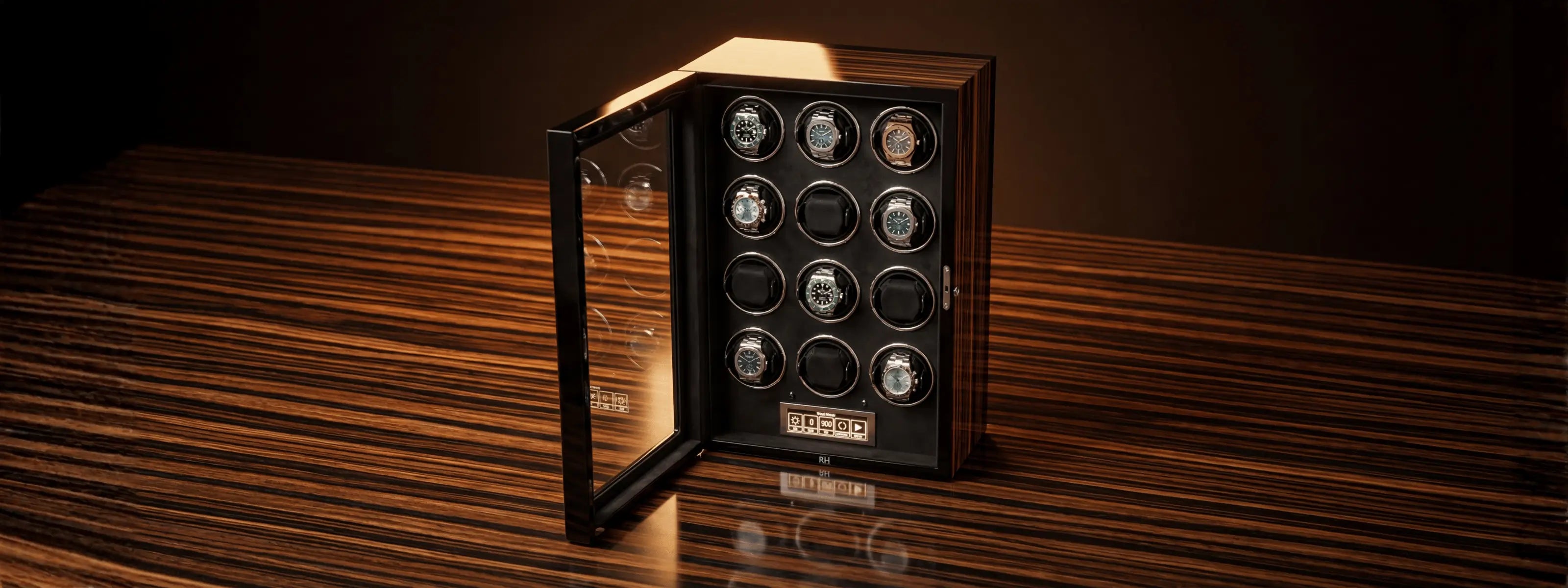
Watch Winder
Automatic watch winder, watch winder, watch turner or watch winder – whatever the term, the use is the same: to keep your timepiece moving when you are not wearing it. Each model in our catalog simulates the natural…
Automatic watch winder, watch winder, watch turner or watch winder – whatever the term, the use is the same: to keep your timepiece moving when you are not wearing it. Each model in our catalog simulates the natural movement of the wrist thanks to a silent motor, thus preserving the watchmaking oils and complications of your mechanical watches.
Our winders cover all profiles: compact 1-watch winder for beginners, 6 or 12-watch box for collectors, up to safes with integrated winders for valuable collections. Compatible with Rolex, Patek Philippe, Audemars Piguet, Omega, Breitling and all automatic manufacturers – with individual TPD setting per slot.
Filters
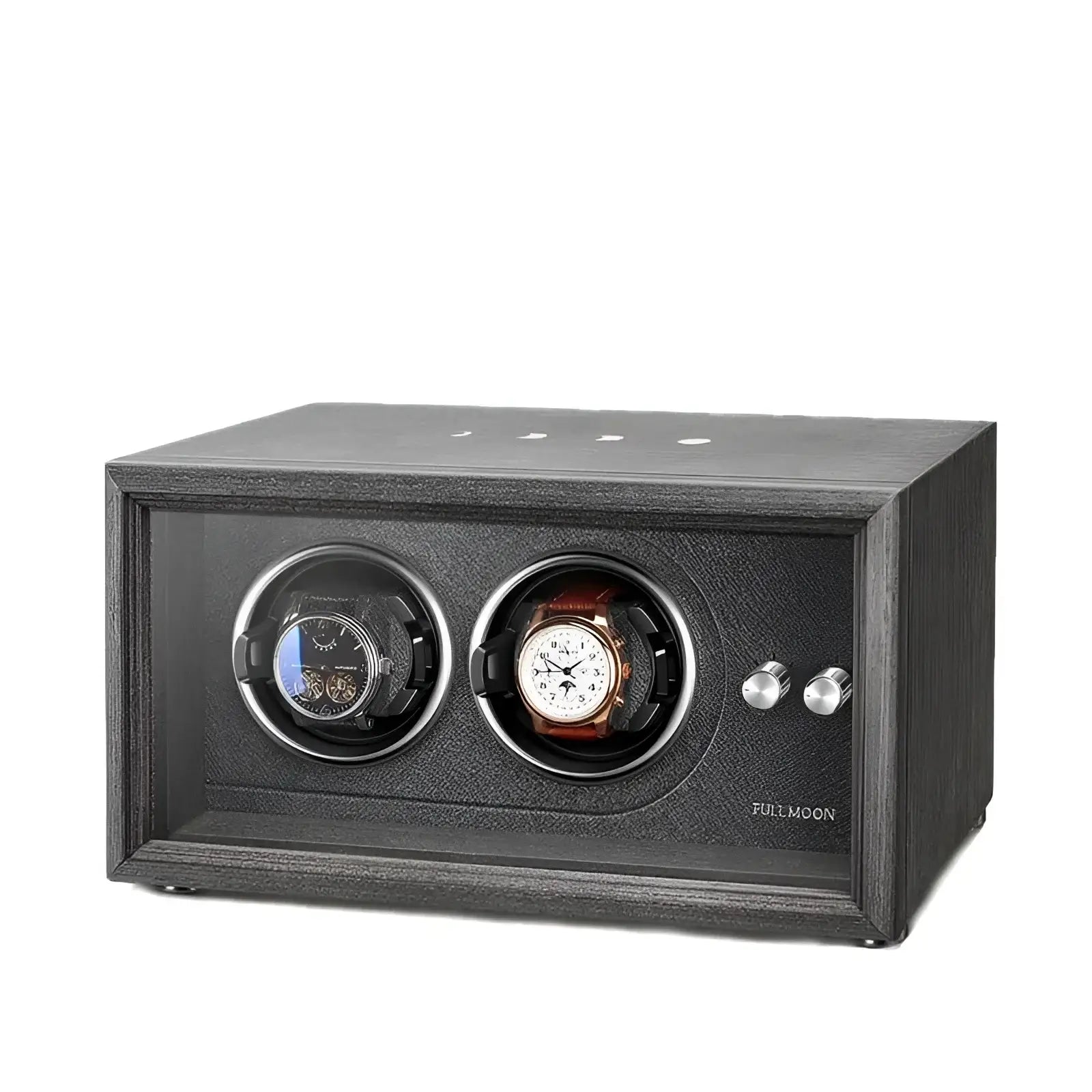
Winder - Duo Anthracite Tempo
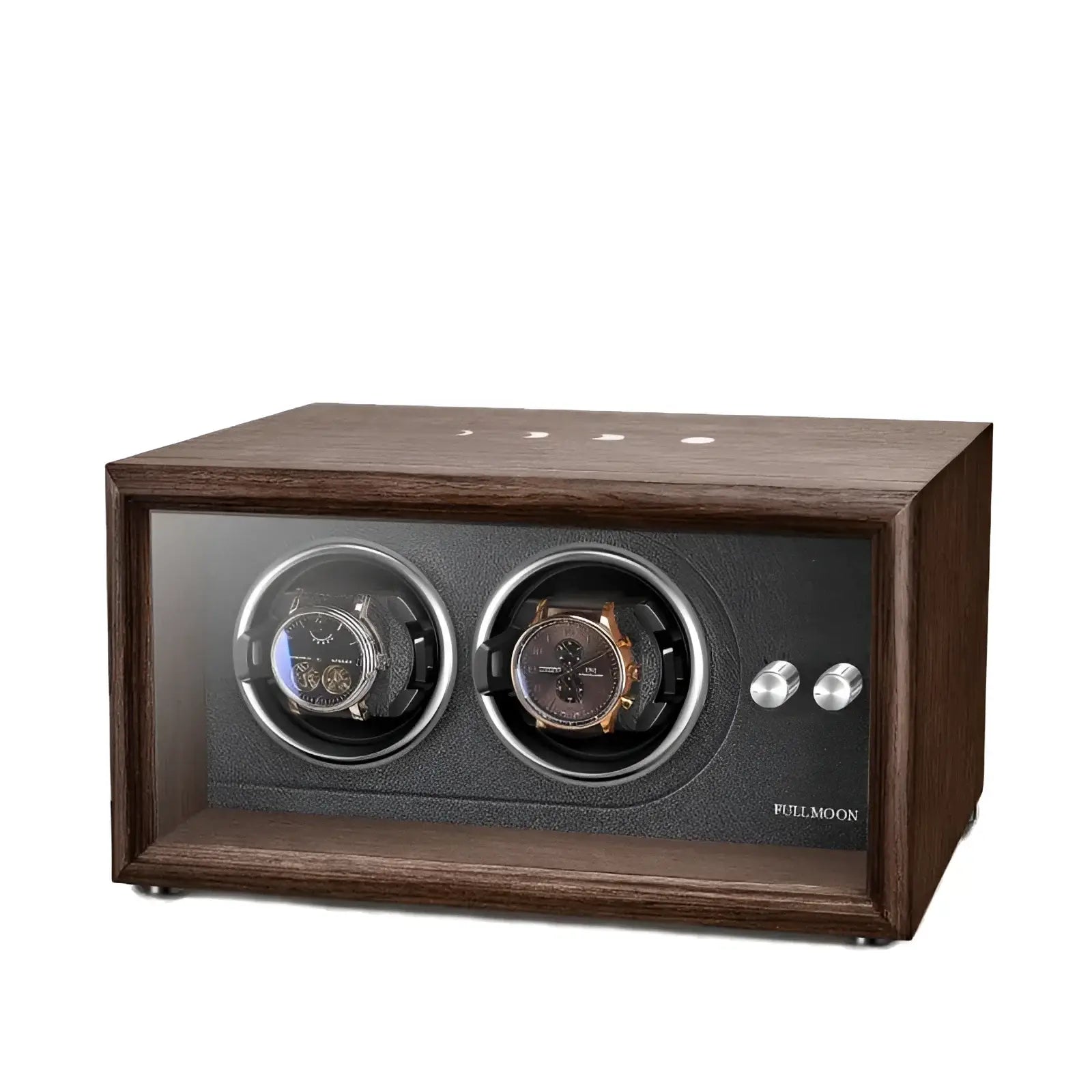
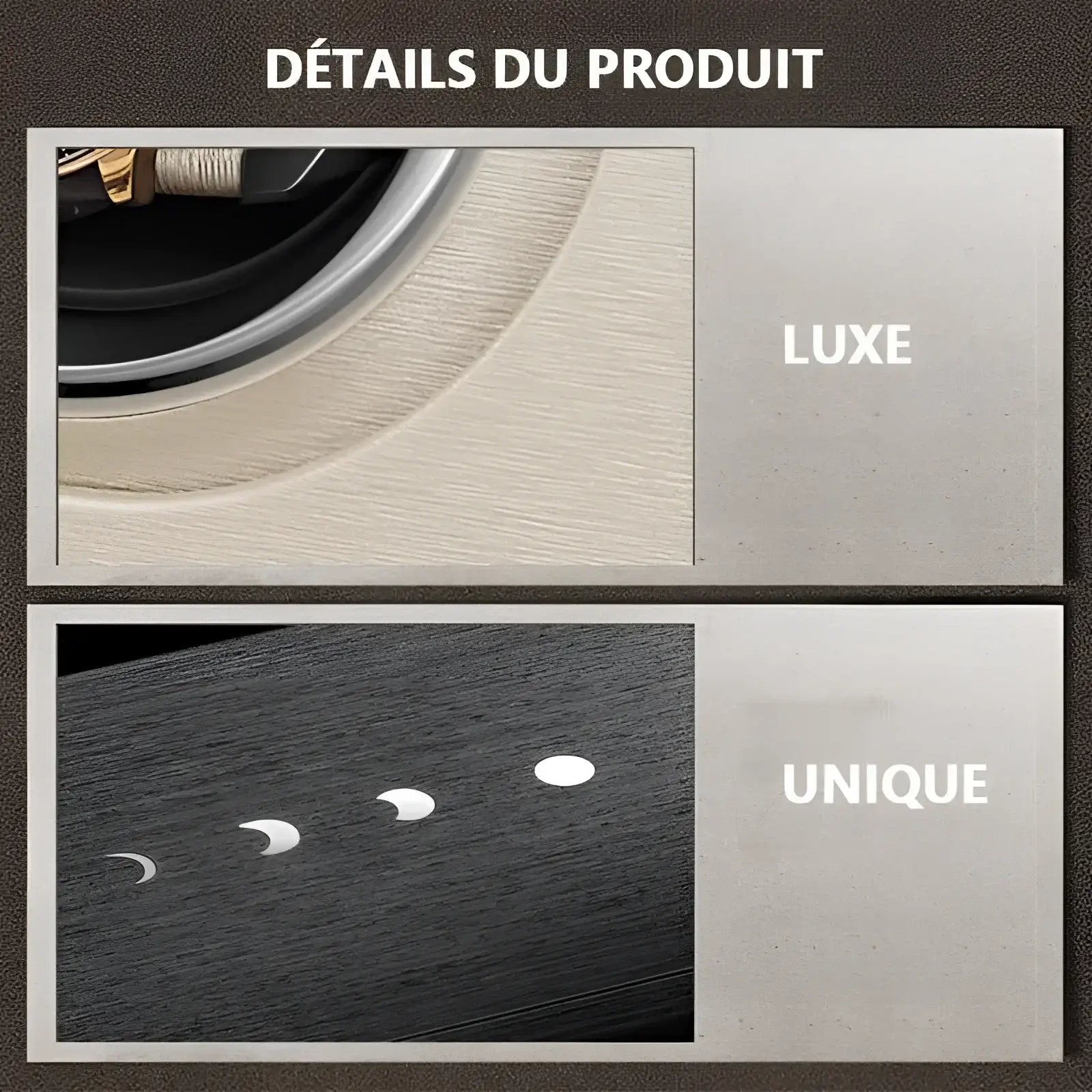
Watch Winder - Duo Wood
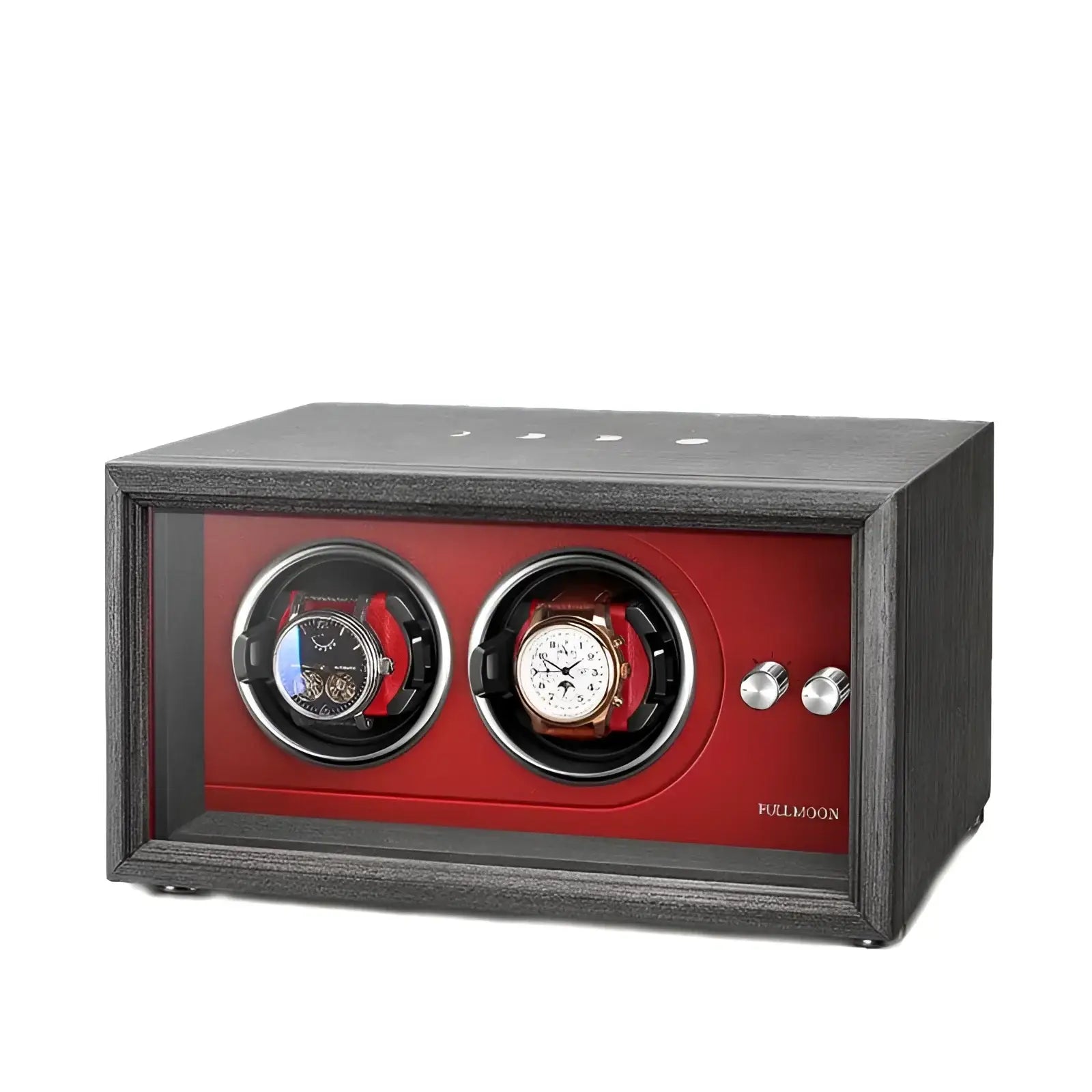
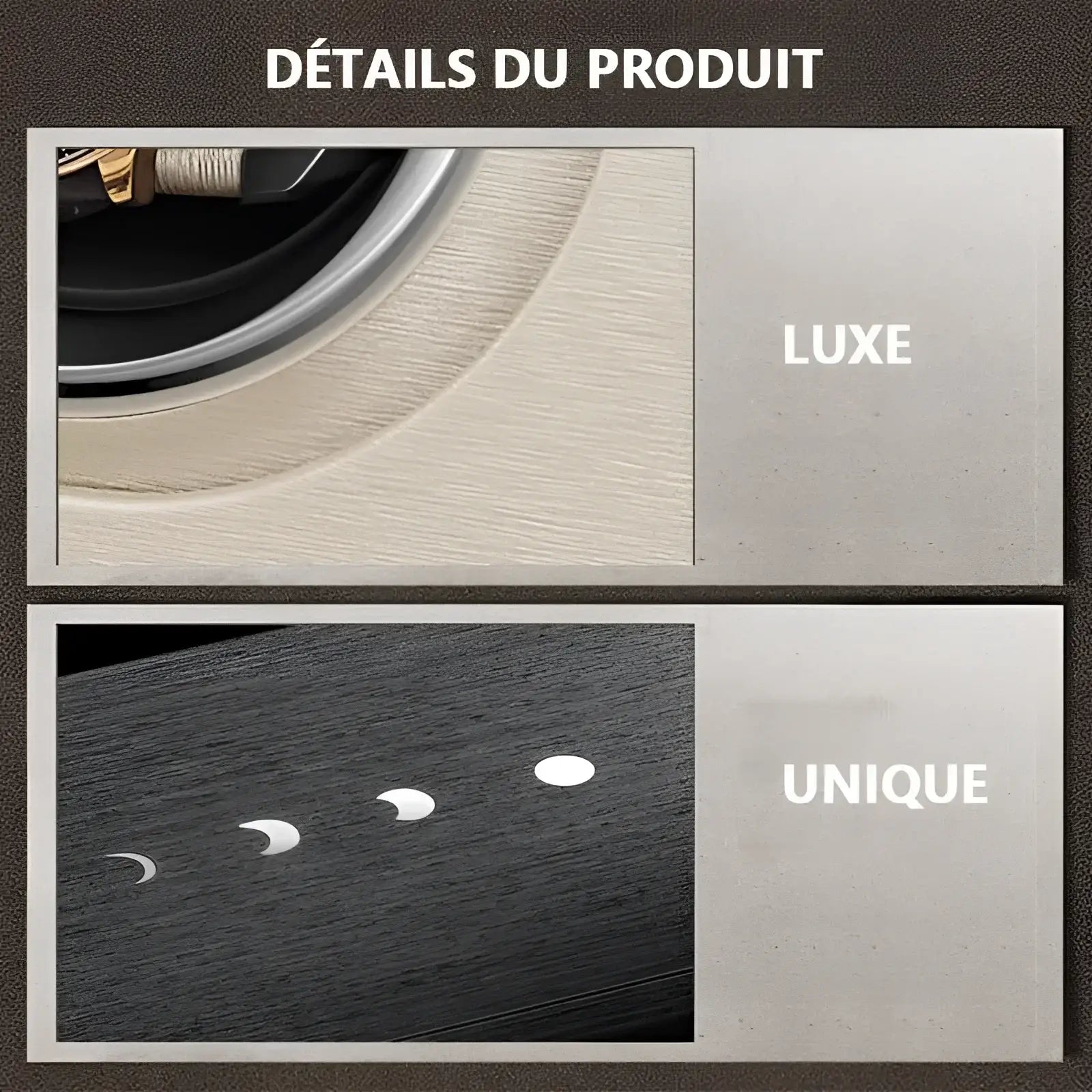
Watch Winder - Duo Elegance Red
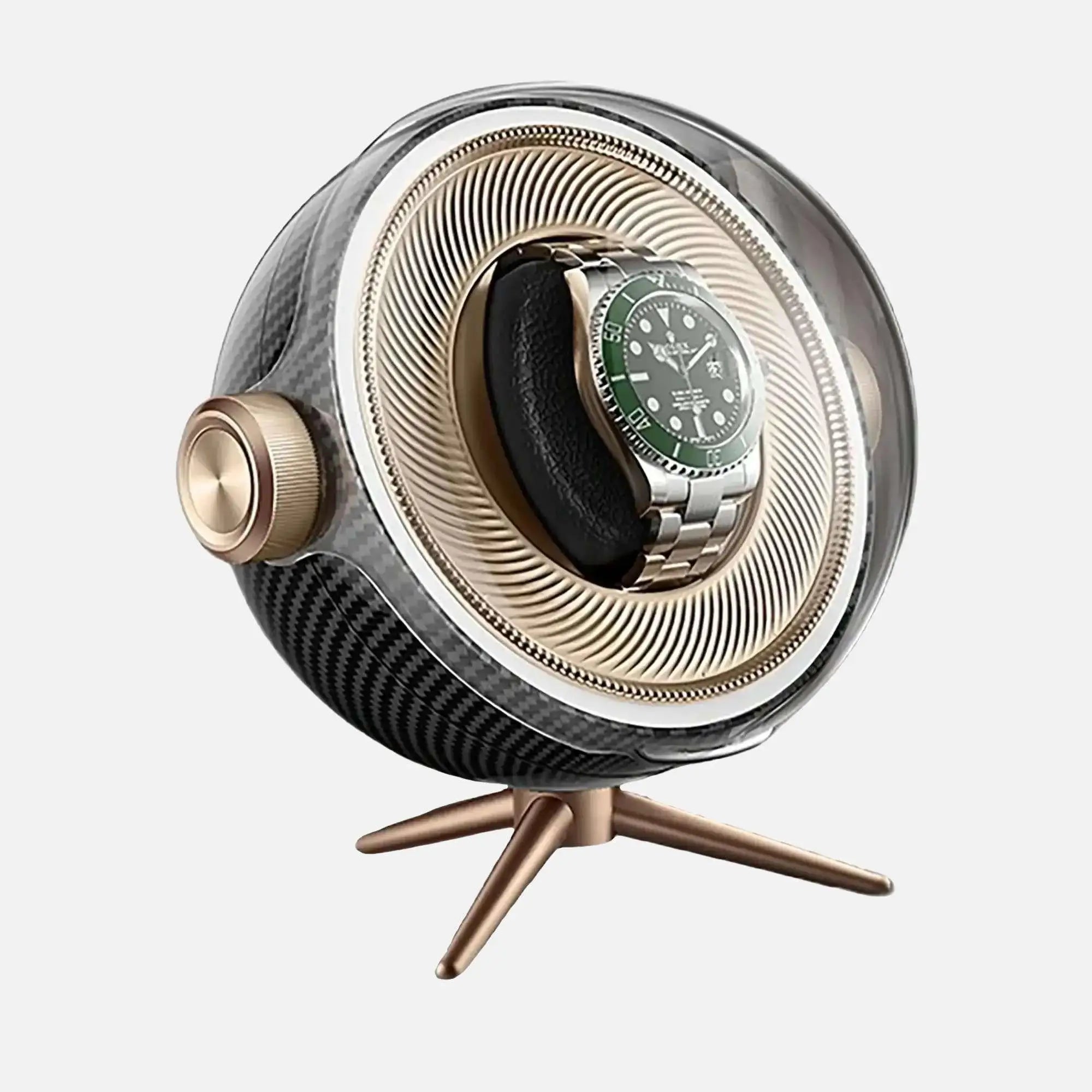
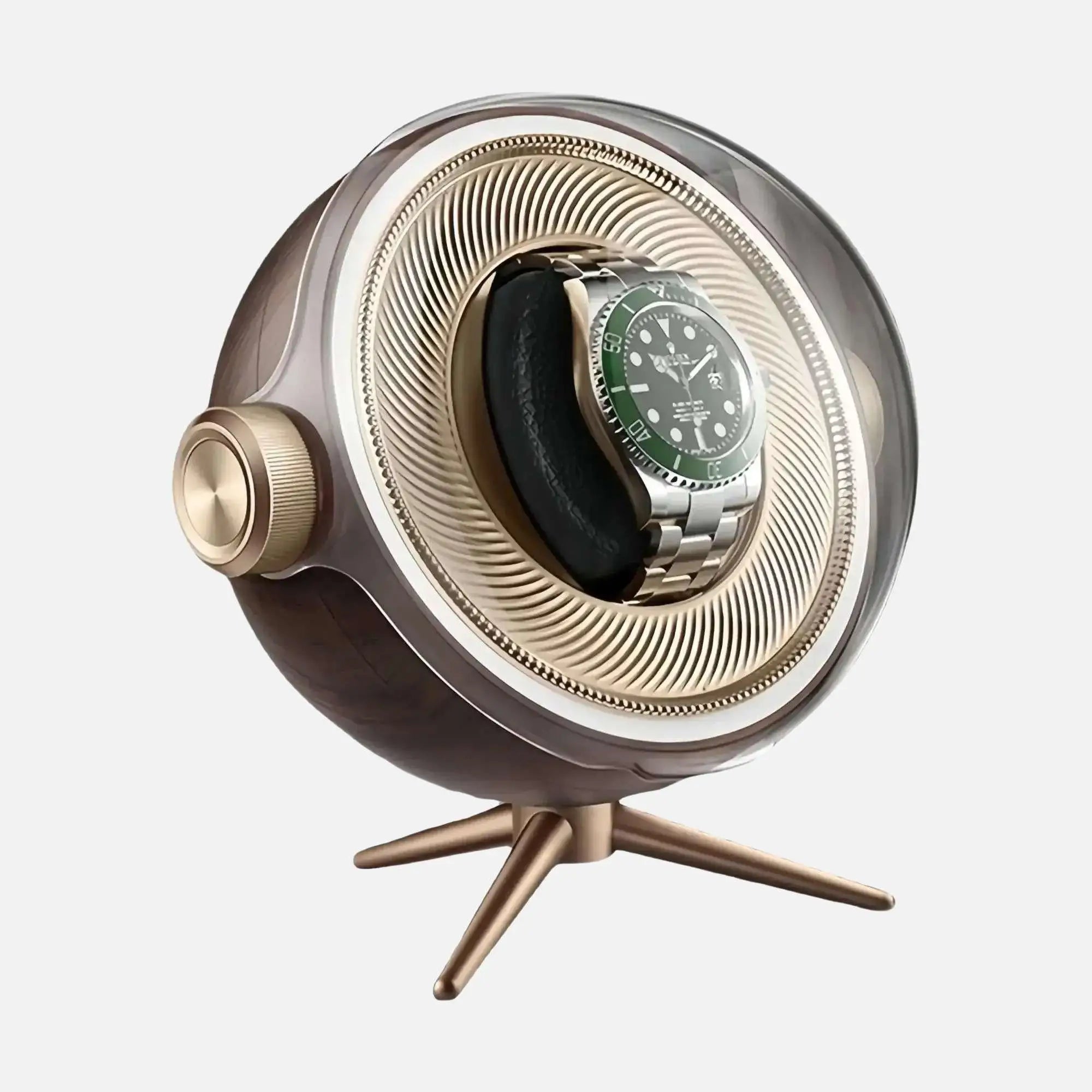
Cosmos Solo Sphere Winder - Designer Rotating Case
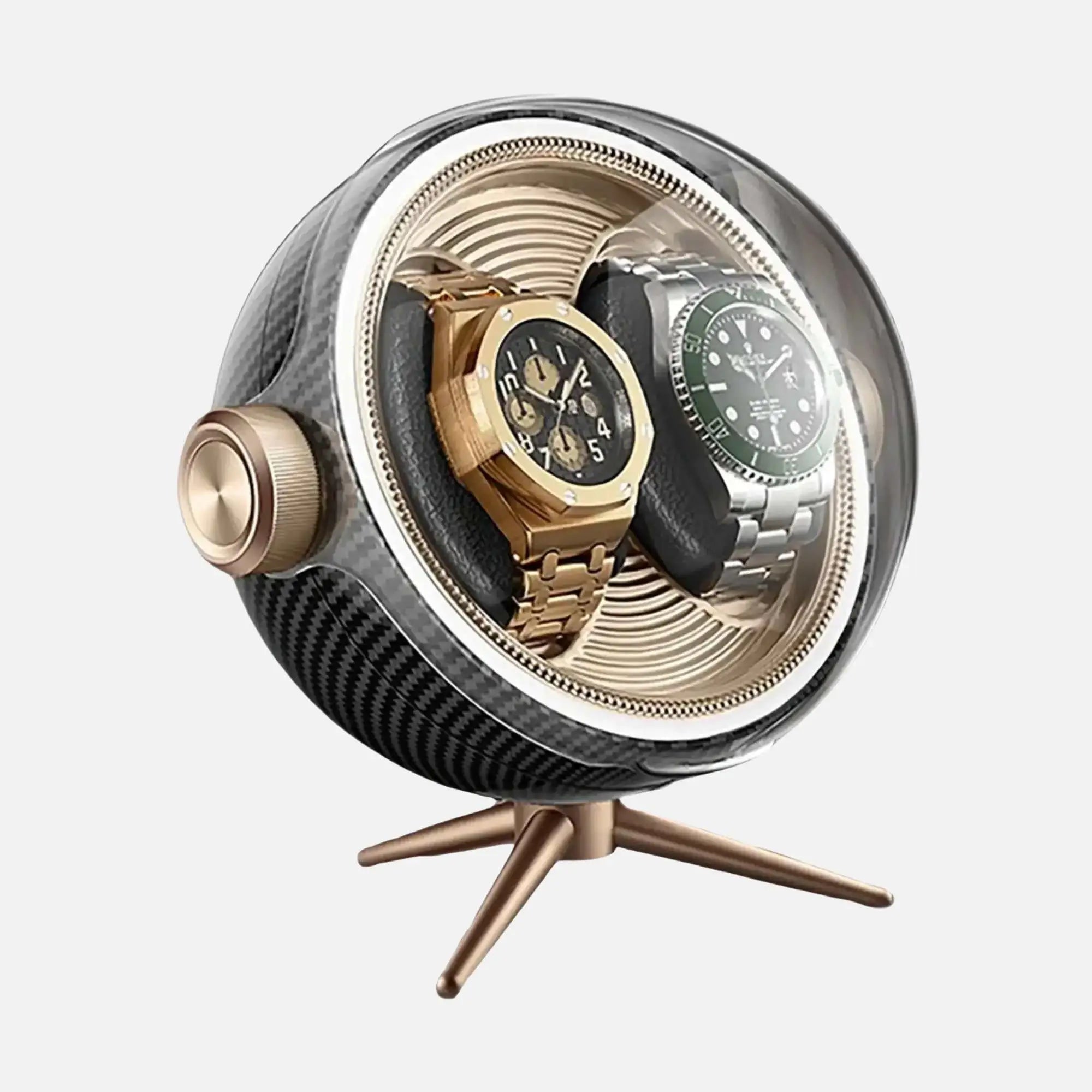
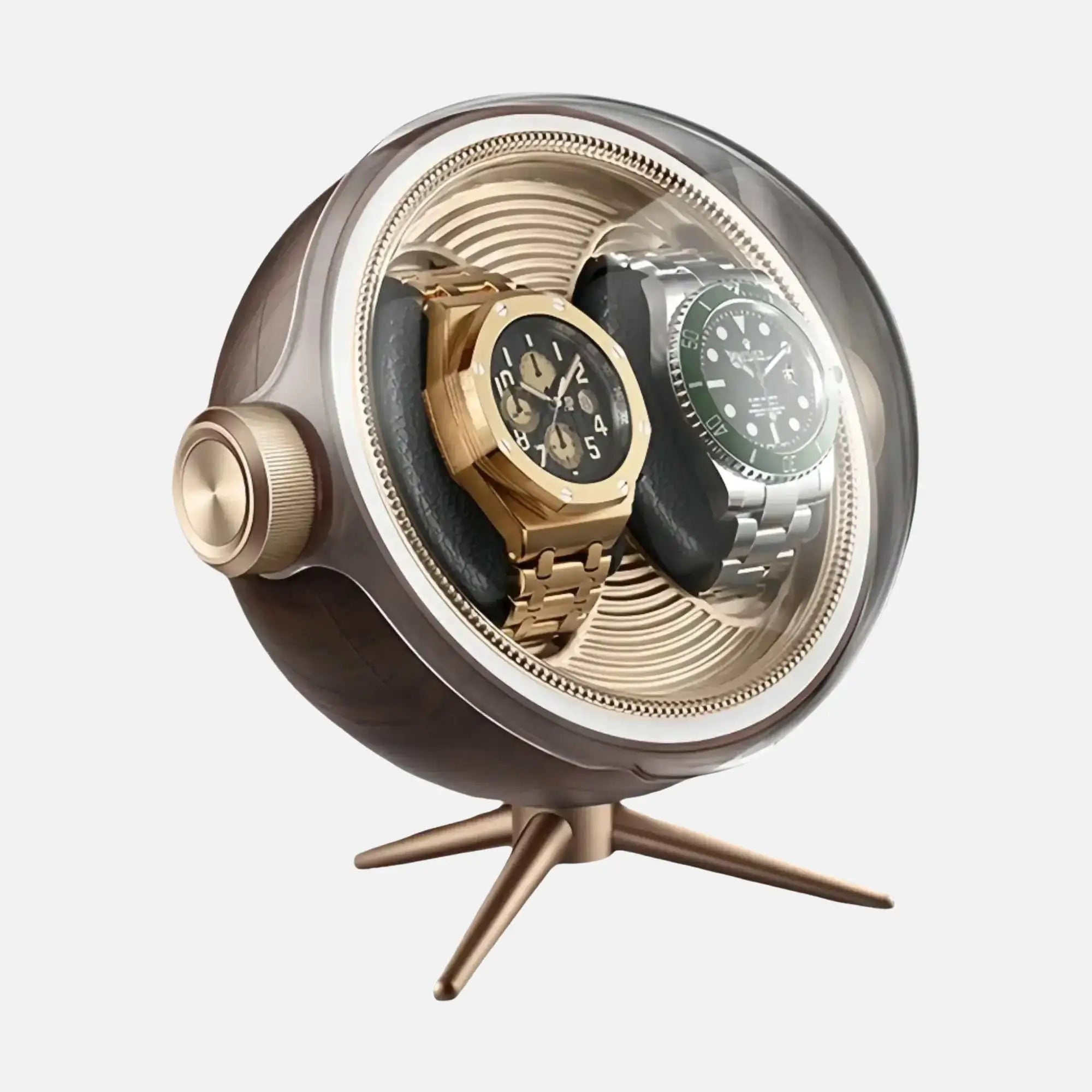
Cosmos Duo Sphere Watch Winder – Designer Rotating Watch Box for 2 Watches
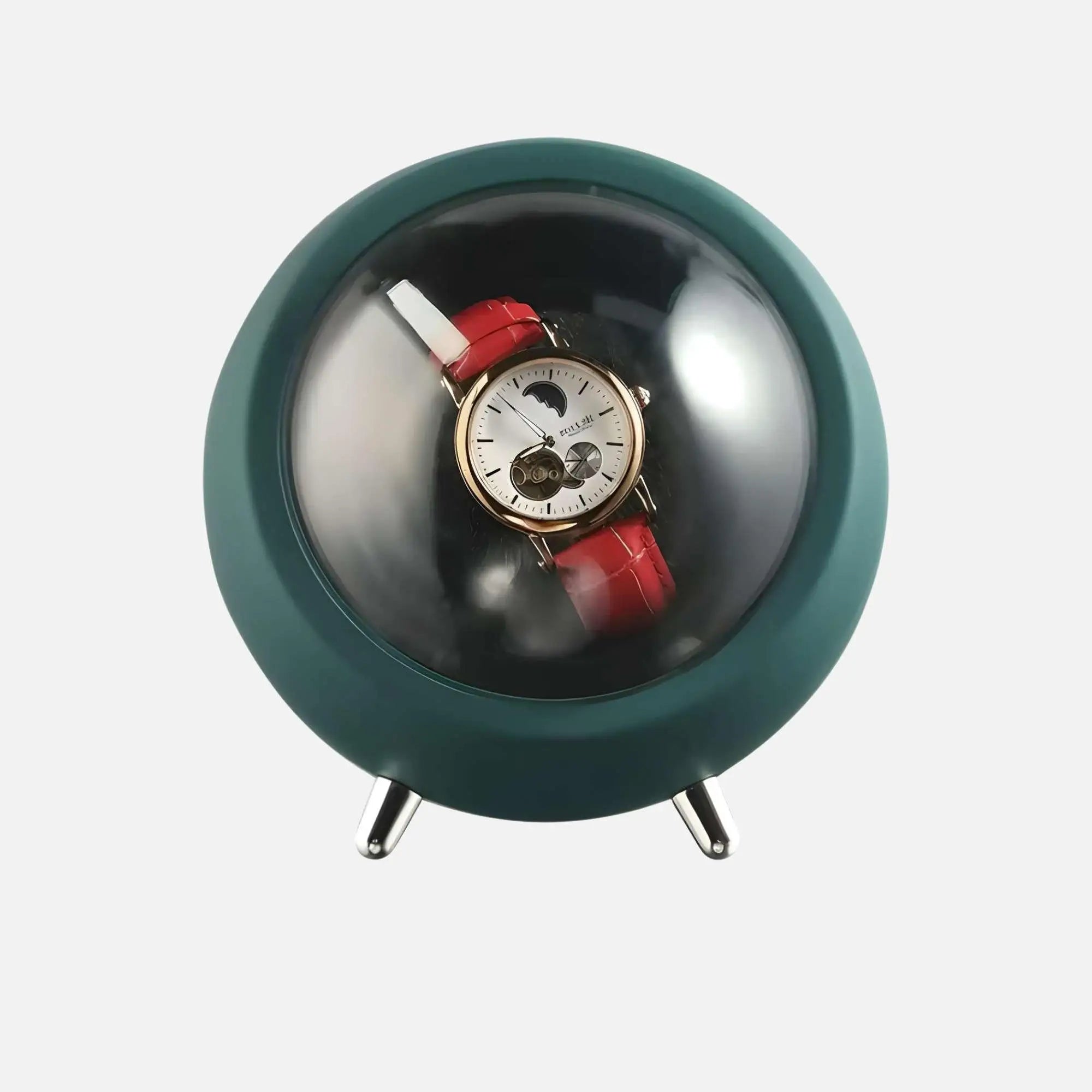
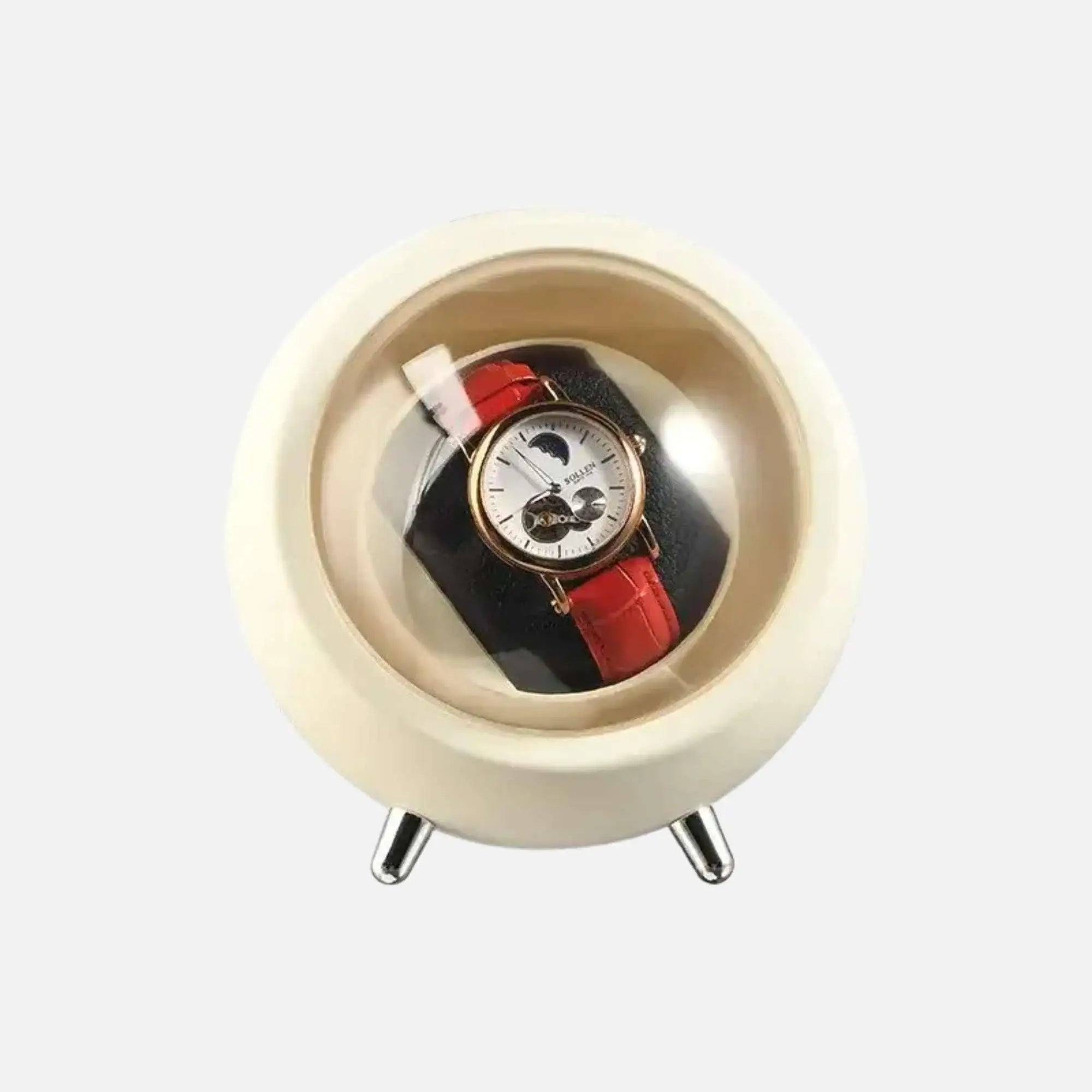
Automatic Watch Winder - Cosmic Sphere
Why use an automatic watch winder?
An automatic watch does not run on a battery. It draws its energy from the movement of the wrist: every everyday movement causes the rotor—an oscillating weight housed in the movement—to turn, gradually winding the mainspring in the barrel. As long as you wear it regularly, it stays on time and in perfect working order.
But when left in a drawer, it stops. Depending on the caliber, the power reserve varies between 38 and 72 hours. After this time, the watch oils thicken, complications become misaligned, and each manual time adjustment unnecessarily stresses the crown and its seals. For perpetual calendar, moon phase, or tourbillon watches, setting the time can take several minutes—or even require the intervention of a watchmaker.
An automatic watch winder solves this problem at its source. It mechanically replicates the natural movement of the wrist, keeps the mainspring under constant tension, and keeps your watch ready to wear—without manual intervention, without risk of forgetting, without unnecessary wear.
How does a watch winder work?
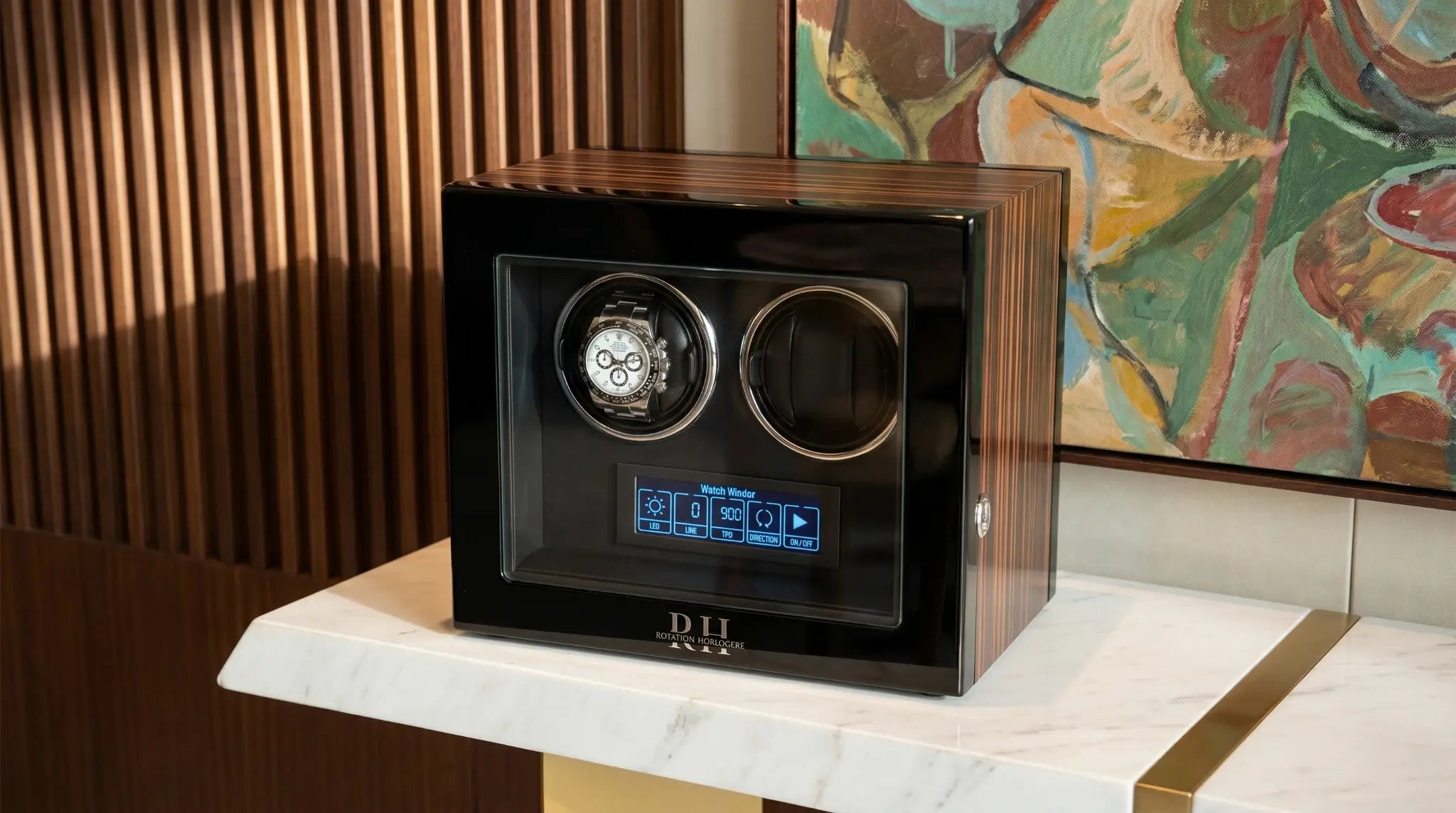
Your watch is placed on a rotating cradle inside the winder. A motor rotates this cradle according to a precise program—turns per day (TPD), clockwise, counter-clockwise, or bidirectional rotation direction, and activity/pause cycles. This movement faithfully reproduces the activity of a wrist during the day.
The central parameter is TPD—turns per day. Each watch manufacturer has its own recommendations: a Rolex Submariner operates optimally starting from 650 TPD in bidirectional rotation, an Omega Seamaster around 800 TPD, a Patek Philippe Grand Complication according to specifications specific to each caliber. Our winders offer adjustable and individual settings per slot—each watch receives exactly the program it deserves.
A winder cannot overwind your watch. Modern automatic watches incorporate a clutch mechanism that activates as soon as the spring is fully wound. The winder continues to turn, but no additional energy is transmitted to the barrel. This device is designed to operate continuously, without risk to your timepiece.
Recommended TPD by watch manufacturer
Each watch manufacturer publishes its winding recommendations. The table below summarizes the reference values for the most common calibers—for informational purposes, as exact specifications vary by caliber.
| Manufacturer | Affected Models | Recommended TPD | Direction of Rotation |
|---|---|---|---|
| Rolex | Submariner, Daytona, GMT-Master II, Datejust, Explorer | 650 – 800 | Bidirectional |
| Audemars Piguet | Royal Oak, Royal Oak Offshore, Royal Oak Concept | 650 – 800 | Bidirectional |
| Patek Philippe | Nautilus, Aquanaut, Grand Complications | 650 – 800 | Bidirectional |
| Omega | Seamaster, Speedmaster, Constellation | 800 – 1 000 | Bidirectional |
| Breitling | Navitimer, Superocean, Chronomat | 650 – 950 | Bidirectional |
| IWC | Portugieser, Pilot's Watch, Portofino | 650 – 750 | Bidirectional |
| Jaeger-LeCoultre | Reverso, Master, Polaris | 650 – 800 | Bidirectional |
| Vacheron Constantin | Overseas, Traditionnelle, Patrimony | 650 – 800 | Bidirectional |
| A. Lange & Söhne | Lange 1, Saxonia, Datograph | 650 – 750 | Clockwise only |
| Tag Heuer | Carrera, Monaco, Aquaracer | 800 – 1 000 | Bidirectional |
These values are consistent with general manufacturer recommendations. For calibers with grand complications—tourbillon, perpetual calendar, minute repeater—consult our complete TPD guide by caliber.
Popular Watch Winder Comparisons
1-watch winder vs 6-watch winder: which to choose?
A 1-watch winder is ideal if you only wear one automatic watch occasionally. As soon as your collection exceeds two or three pieces worn in rotation, a multi-slot winder with individually adjustable TPD becomes essential—each caliber has its own requirements.
Winder vs safe with winder: what's the difference?
A winder keeps your watch in motion. A safe with an integrated winder does the same while physically protecting your timepieces against theft and forced entry. For a collection whose value exceeds €10,000, the question of physical security naturally arises alongside winding.
Japanese motor vs generic motor: why it matters
The motor is the heart of the winder. A generic motor produces irregular vibrations and a sound level above 20 dB. Our Japanese constant torque motors operate below 10 dB and deliver smooth, jerk-free rotation—essential for calibers sensitive to shocks.
For which watches is a winder essential?
Every automatic watch benefits from a winder, but some calibers absolutely need one:
- Grand complication watches — perpetual calendar, minute repeater, equation of time, tourbillon: restarting these mechanisms after a stop is a delicate operation, sometimes reserved for a watchmaker. The winder eliminates this risk.
- Moon phases — a prolonged stop desynchronizes the moon display. Manual correction takes time and stresses the crown.
- Multi-watch collectors — if you alternate between several automatic watches, those not worn will stop. A winder for 2, 4, 6, or 12 watches keeps the entire collection in motion.
- Valuable watches — Rolex, Patek Philippe, Audemars Piguet, A. Lange & Söhne, Vacheron Constantin, Jaeger-LeCoultre, Breguet, IWC, Omega, Breitling: these timepieces deserve daily attention that only a quality winder can guarantee in the long term.
Silent winder: a non-negotiable criterion
A winder that hums in an office or bedroom immediately loses its legitimacy. Our automatic watch winders integrate Japanese constant torque motors operating below 10 decibels—inaudible under normal use conditions. Printed circuit boards are shielded against magnetic interference, in accordance with IEC 60068-2-10, to protect calibers sensitive to magnetism.
Each model offers individual settings per slot: adjustable TPD from 650 to 2,100 turns per day, customizable rotation direction, configurable activity and pause cycles. These parameters strictly adhere to the recommendations of major watch manufacturers.
Which winder to choose based on your collection?
1-watch winder — to start
Ideal if you own a single automatic watch that you don't wear every day. Compact, silent, it can be placed on a desk or shelf without cluttering. Our entry-level models start from €99.
2 to 4-watch winder — for the experienced enthusiast
Do you alternate between two or three automatic watches depending on your outfits or activities? A double or quadruple winder keeps each piece wound independently, with distinct TPD settings per slot. Available in wood, leather, carbon, or glossy black lacquer.
6 to 12-watch winder — for the collector
Large collections require a winder capable of managing multiple calibers simultaneously, each with its own rotation program. Our Chronos, Heritage, President, or Chancellor models meet this need with first-class finish and technology.
24-watch winder — for large collections
The Diplomat accommodates up to 24 automatic watches in an elegant and functional cabinet. The benchmark solution for serious collectors who want to centralize the maintenance of their watch heritage.
Safe with integrated winder — security and winding combined
For valuable watches, a winder alone is not enough. Our safes with integrated winders—Bastion, Bellagio, Bellagio Pro, Bellagio Max, Vauban—combine physical anti-burglary protection and continuous automatic winding. Biometric lock, steel walls, anchor bolts: your watches are wound and secured at all times.
Winder for Rolex: what you need to know
The Rolex Submariner, Daytona, GMT-Master II, and Datejust operate in bidirectional rotation with a recommended TPD of 650 to 800 turns per day. Our winders are calibrated to meet these specifications and keep the Perpetual movement in perfect working order.
A winder for Rolex is also the ideal gift for a watch enthusiast: useful daily, elegant in any interior, and compatible with all other major manufacturers—Omega, Patek Philippe, Audemars Piguet, Breitling, IWC, Tag Heuer, Longines.
Inexpensive automatic watch winder: is there good value for money?
Yes. An entry-level winder is not a bad winder—provided it meets three fundamental criteria: silent motor, adjustable TPD, and bidirectional rotation. Our models starting from €99 check these three boxes. For collector watches or grand complications, we recommend moving up in range—the cost of a premature watch revision far exceeds that of a good winder.
Why choose Rotation Horlogère?
- Watchmaking expertise — all our models are designed in collaboration with partner watchmakers and tested on the calibers of major manufacturers.
- Ultra-silent Japanese motors — less than 10 dB, shielded against magnetism.
- Universal compatibility — over 500 automatic references supported, from entry-level watches to grand complications.
- 2-year warranty — responsive after-sales service with remote or workshop diagnostics.
- Free delivery from €49 purchase, secure shipping.
- Over 1,000 collectors trust us for the maintenance of their watch heritage.
Let customers speak for us
frequently asked Questions
Automatic Winder FAQ
Your watch is placed on a rotating cushion. The purpose of the winder is to simulate the movement of your wrist. This movement keeps the rotor and oil in your watch moving.
This allows you to maintain the quality of your watch throughout the day.
An automatic watch must be kept in motion regularly to maintain its accuracy. When it remains stationary for too long, the watch oil can congeal and the internal parts can wear out prematurely. An automatic watch winder avoids these problems by simulating the natural movements of the wrist, thus preserving the accuracy and longevity of your timepiece.
On average, an automatic watch needs about 600 rotations per day (TPD). However, depending on the age or brand of your watch, this value can vary. A recent watch will generally only need 500 rotations per day, while an older model will sometimes require more daily rotations.
Yes. Our watch winders are designed to fit the vast majority of automatic watches, regardless of strap or dial size. If a specific model has a limitation, this will be clearly indicated in its product sheet.
Yes, many of our automatic winders feature Japanese Mabuchi motors, renowned for their reliability, quietness, and low energy consumption. Mabuchi is a global leader in premium motors, ensuring precise and long-lasting operation to preserve your timepieces.
No. A quality automatic watch winder, like those offered by Rotation Horlogère, protects your watch by preventing frequent stopping and starting of the mechanism, thus reducing internal wear.
Our winders are designed to last for years thanks to their robust materials and reliable motors. They are guaranteed and can operate continuously for several years without any problems, thanks to their proven technology and careful manufacturing.