

Rubber Straps for Luxury Watches: The 2026 Guide
We care for our collections. We protect them, wind them and display them. Yet one detail is still overlooked by many enthusiasts: the strap. It accounts for half of the visible surface on the wrist. It determines comfort, character and, very often, the occasions on which we dare to wear the watch. Changing the strap can feel like rediscovering a timepiece we thought we knew by heart. In recent seasons, one material has become central to that conversation: rubber.
Rubber is no longer a material to dismiss
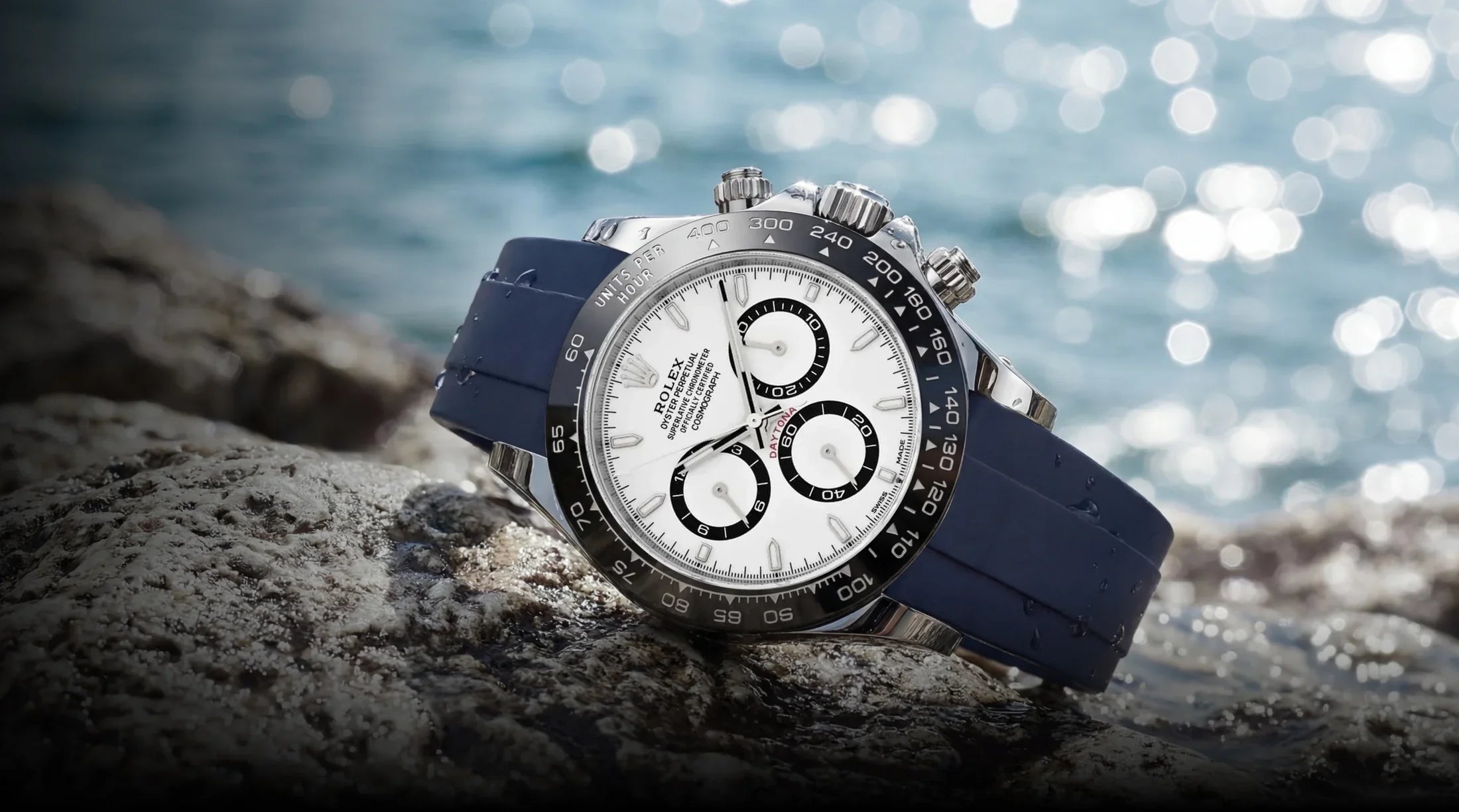
First, a misconception needs to be cleared up. The rubber discussed here has nothing in common with the soft, shiny silicone found on inexpensive sports watches twenty years ago. Today's benchmark has a name: FKM. This fluoroelastomer — the same material Rolex made desirable with its Oysterflex — stands out for its density, durability and resistance to perspiration, UV light, seawater and sunscreen.
A good FKM strap feels matte, dense and slightly silky. It does not stick to the skin, retain odours or lose its shape after several summers. This move upmarket is what convinced many collectors who had long remained firmly attached to leather and steel.
Comfort, endurance and freedom to wear
The first advantage can be summed up in one word: comfort. A well-designed rubber strap follows the wrist without pressure points, is equally at home in the shower or pool, and can be rinsed under the tap in ten seconds. For anyone living in a hot climate, exercising regularly or spending summer between the sea and a terrace, the difference is immediate.
Then comes peace of mind. Wearing a five-figure watch by the water is far less stressful when it is no longer hanging from leather that a single splash could stain. Rubber takes the knocks, cleans easily and forgives. You end up wearing the watch more often — which, after all, is the best reason to own it.
Style matters too. Matte black moves a watch towards sporty elegance; a bright colour or two-tone design instantly makes it feel younger. Without touching the case, you can change its entire character for the price of lunch.
Rubber, leather or steel: each has its place
Rubber does not replace the others; it complements them. Leather retains the advantage for formal elegance, under a cuff or at dinner, but it dislikes water, heat and perspiration, and ages quickly when worn every day. Steel embodies rugged versatility, at the cost of weight and stiffness that not everyone appreciates in summer. Rubber fills the space between them: the watch you want to wear everywhere without thinking, from the office to the beach. For many collectors, the answer is not to choose one, but to own all three and switch according to mood and season.
Integration: the detail that separates good from mediocre
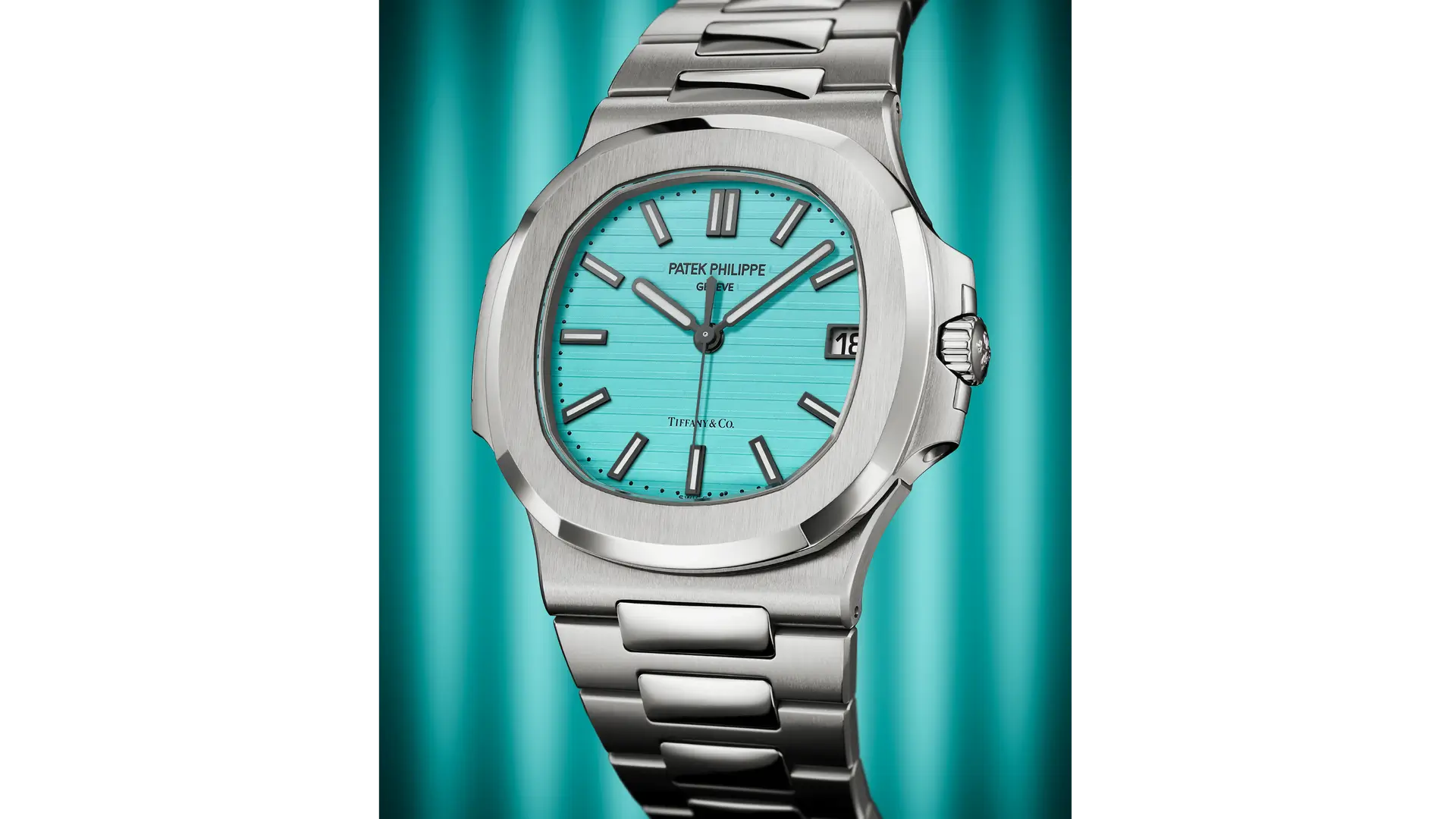
This is where everything is decided. On a watch with conventional lugs, almost any spring-bar strap can work. But with integrated cases — a Royal Oak, a Nautilus or a Rolex fitted for Oysterflex — the slightest inaccuracy is obvious. A truly premium strap is cut to follow the case to the millimetre, without gaps or steps between the metal and the material.
This precision is invisible when done well and immediately noticeable when absent. It should be the first criterion before buying: was the strap designed specifically for your reference, or is it a universal model made to fit as best it can?
How to choose the right rubber strap
Beyond integration, a few pointers help separate the best from the rest. Check the stated material — genuine FKM rather than vaguely described generic “rubber”. Examine the finishing of the attachment system and buckle, which often reveals more about a manufacturer's standards than anything else. Finally, check the warranty: a manufacturer confident in its products will not hesitate to cover its straps over the long term.
Several aftermarket specialists have established themselves in this demanding field. Helvetus rubber straps, for example, are designed reference by reference for major Rolex, Audemars Piguet, Patek Philippe and Omega models. They use quality FKM, include a lifetime warranty on the rubber and are delivered without customs charges. It is a way to transform a watch without distorting its character — or spending the price of a dial.
A collector's habit: keep the original
One final point is too often forgotten in the excitement of making a change: carefully retain the original strap or bracelet, including the buckle and pins. A watch sold with its complete original configuration will always command a better price than a piece missing its factory components. Rubber is not a betrayal of the original strap; it is a second life that can be reversed in thirty seconds.
In short
Changing a strap remains the quickest and most affordable way to transform a watch. While a custom dial or gem-set bezel costs a fortune and permanently alters the piece, a strap can be fitted and removed in seconds. The same watch can be dressed for the office, the weekend or a holiday — and worn in situations where it might otherwise never have left the safe.
The next time your watch feels a little too conventional, do not immediately look to the case. Look down. The answer may be as simple as a new strap.

Written by Bastien Jaffré
Founder of Rotation Horlogère, expert in automatic winding and high-end watch accessories. For several years, he has supported watch enthusiasts in the choice of their watch winders and boxes, with a rigorous approach focused on technique and quality.

Leave a comment
This site is protected by hCaptcha and the hCaptcha Privacy Policy and Terms of Service apply.